The kit behind
the view.

The imaging train, mount and field kit behind a Durbin observing night.

01
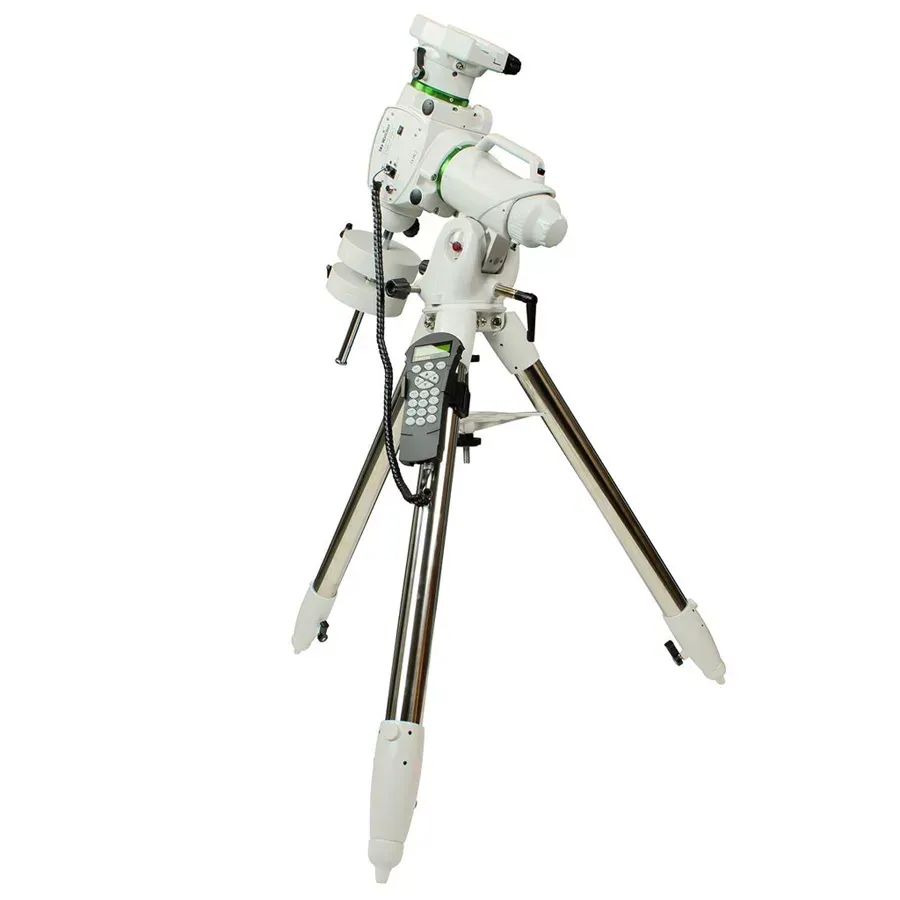
Sky-Watcher EQ6-R Pro equatorial mount on its stainless steel tripod with SynScan hand controller

Equatorial mount

Sky-Watcher EQ6-R Pro

The belt-driven GoTo mount the imaging rig is built on. It tracks the sky's rotation accurately enough to hold a target still through long exposures, and carries a substantial optical tube without complaint. The Wi-Fi version is driven from a phone or laptop instead of the handset.

  • GoTo tracking
  • Belt drive
  • Wi-Fi control
02
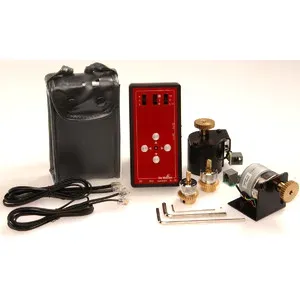
Sky-Watcher enhanced dual-axis motor drive kit for the EQ5 mount with red hand controller

Tracking upgrade

EQ5 dual-axis motor drive

Motorises both axes of an EQ5 mount so it can follow a target smoothly rather than being nudged by hand. The enhanced handset adds an ST4 autoguider port and selectable solar, lunar and sidereal rates.

  • Dual-axis tracking
  • ST4 autoguider port
  • Solar / lunar / sidereal
03
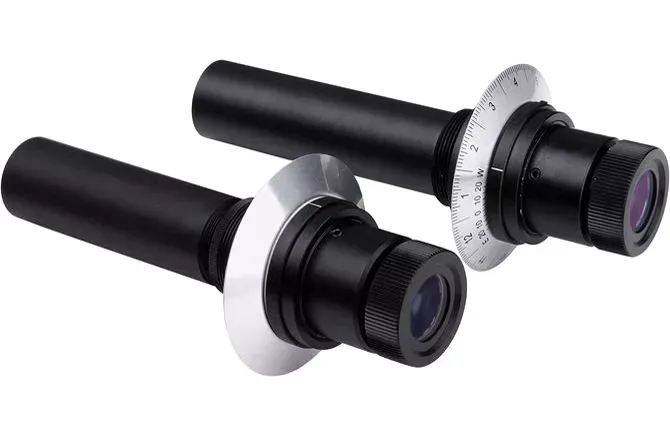
Sky-Watcher polar alignment scope for EQ5, EQ6 and NEQ6 mounts

Alignment

EQ5 / EQ6 / NEQ6 polarscope

A small reticled telescope that sights through the mount's polar axis. Getting this right is what separates a night of round stars from a night of trailed ones, so it is the first thing done after the tripod is levelled.

  • Polar alignment
  • Reticle pattern
  • Fits EQ5 / EQ6 / NEQ6
04
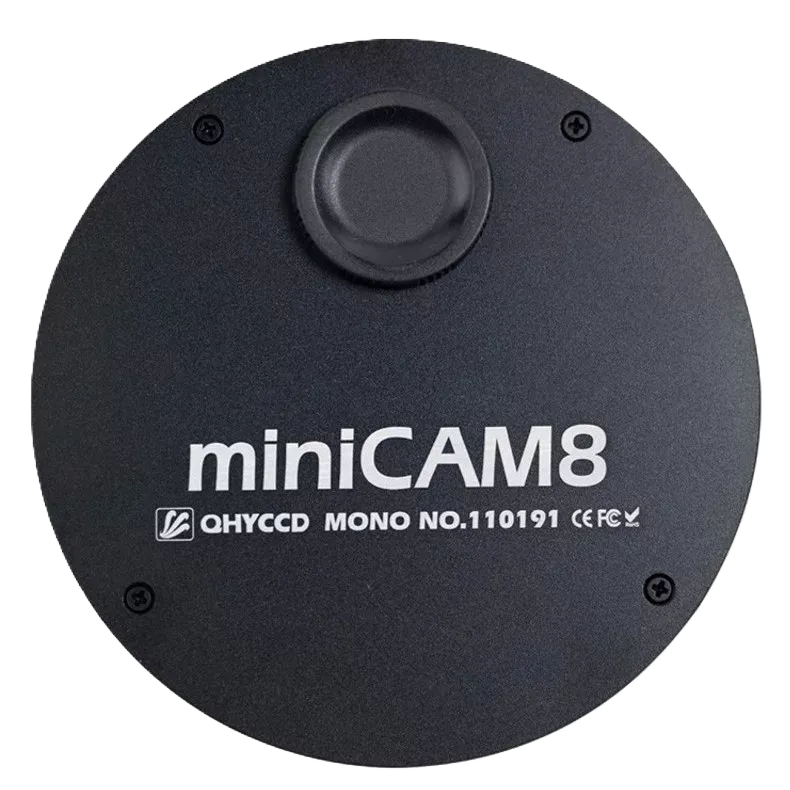
QHYCCD miniCAM8 monochrome cooled astronomy camera

Imaging camera

QHYCCD miniCAM8M

The main imaging camera: a cooled monochrome CMOS built around a Sony IMX585 sensor, with a filter wheel integrated into the body. Cooling suppresses the thermal noise that would otherwise swamp faint nebulosity. Supplied as a combo set with an off-axis guider.

  • IMX585 mono sensor
  • Thermoelectric cooling
  • Integrated filter wheel
05
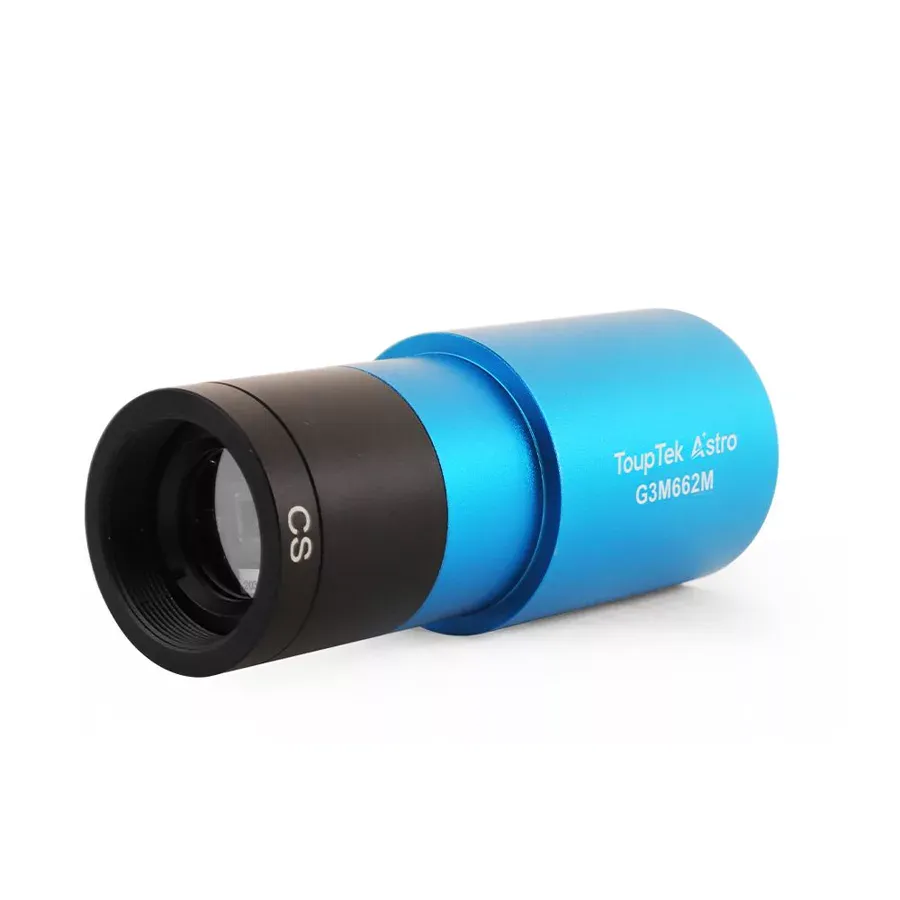
ToupTek Astro G3M662M monochrome guiding camera

Guide camera

ToupTek G3M662M

A small monochrome camera that watches a single star and reports any drift back to the mount, which corrects itself many times a minute. Guiding is what makes exposures of several minutes possible at all.

  • Autoguiding
  • Mono sensor
  • Compact body
06
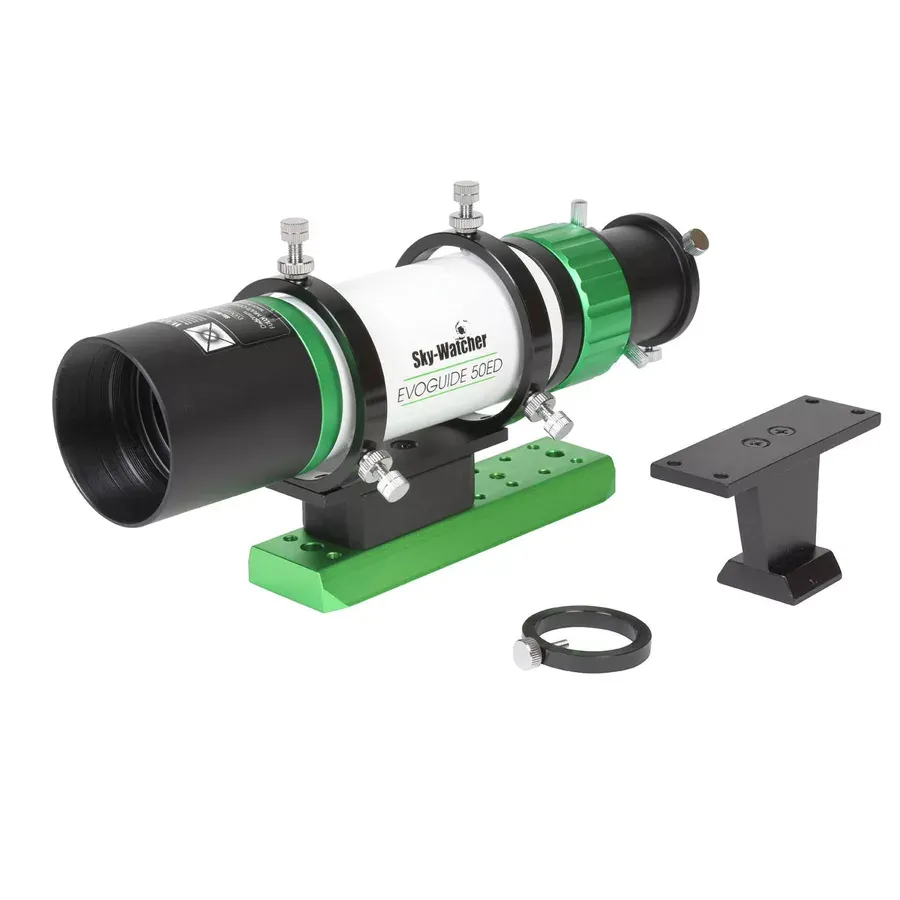
Sky-Watcher Evoguide 50DX APO guide scope with mounting bracket

Guide scope

Sky-Watcher Evoguide 50DX

The 50 mm ED doublet the guide camera looks through. Short, light and sharp enough to double as a wide-field astrograph in its own right when a small target does not need the main optics.

  • 50 mm ED doublet
  • 242 mm f/4.8
  • Helical focuser
07
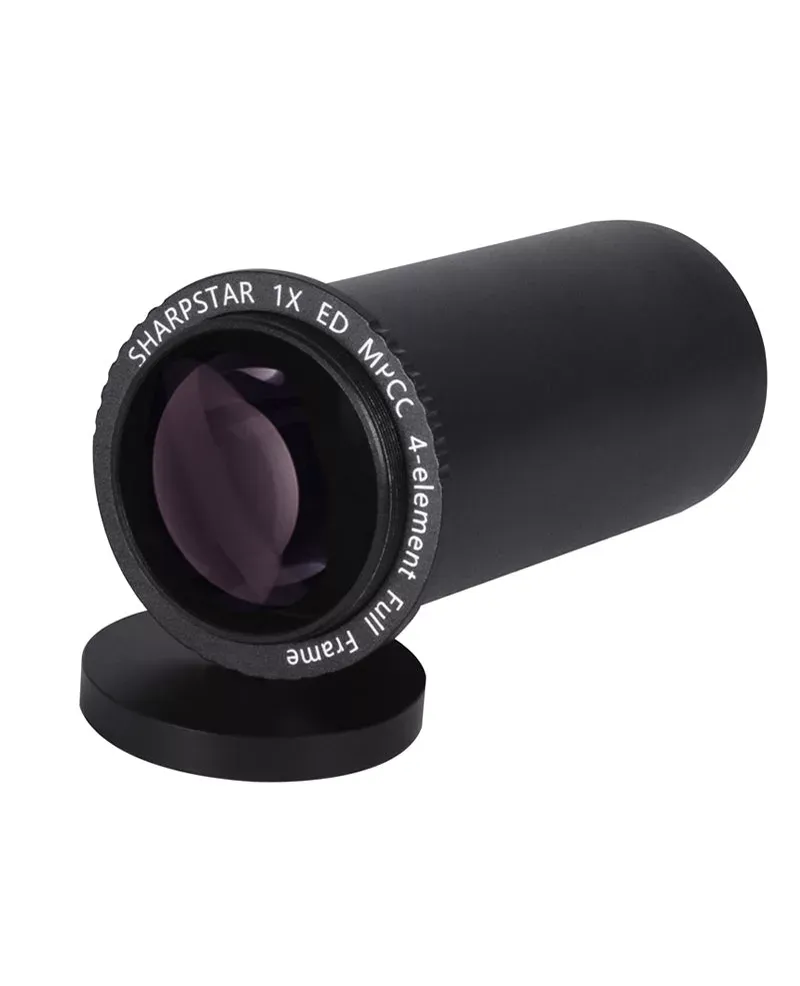
SharpStar 1x MPCC ED coma corrector for Newtonian telescopes

Coma corrector

SharpStar 1× MPCC

Fast Newtonian mirrors flare stars into small comet shapes towards the edge of the frame. This four-element corrector flattens that away across a full-frame sensor without changing the focal length.

  • Full-frame coverage
  • For f/3–f/6 Newtonians
  • 55 mm back focus
08
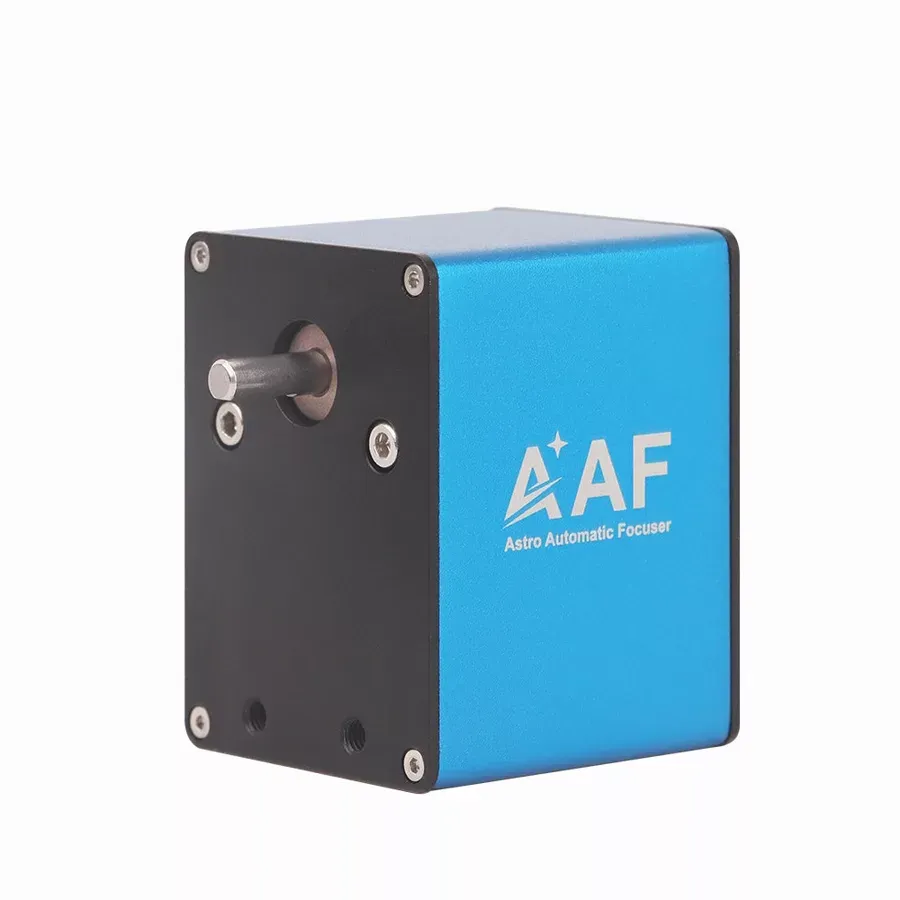
ToupTek Astro AAF automatic electric focuser

Automatic focuser

ToupTek Astro AAF

A motor on the focuser, so focus can be set from the software instead of by hand at the tube. Its temperature sensor matters more than it sounds: optics shift focus measurably as the night cools.

  • Motorised focus
  • ASCOM driver
  • Temperature sensor
09
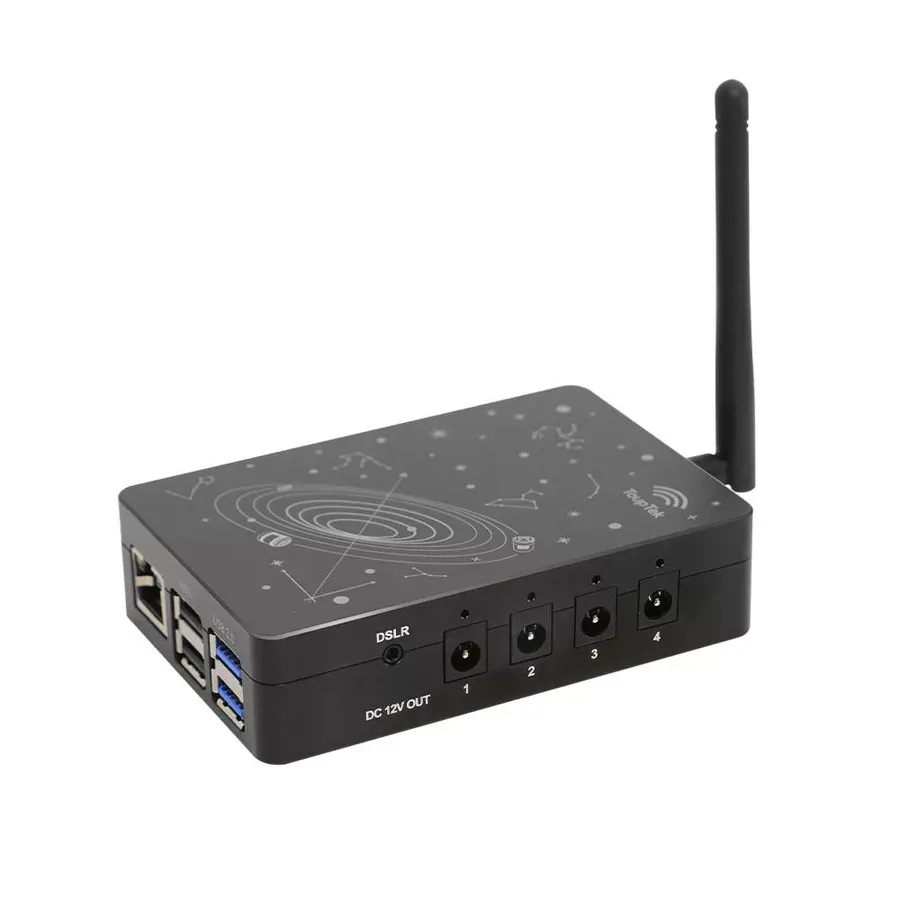
ToupTek StellaVita wireless astrophotography controller showing USB and 12V ports

Session controller

ToupTek StellaVita

The hub the rest of the rig plugs into. It carries the cameras, focuser and mount on powered USB, distributes 12 V, and puts the whole session on Wi-Fi, which keeps one cable run to the telescope instead of six.

  • Wi-Fi session control
  • Powered USB 3.0
  • 12 V distribution
10
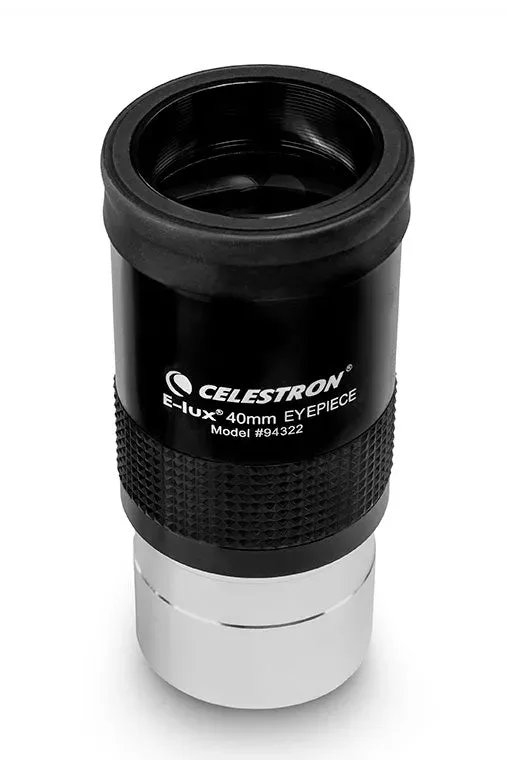
Celestron E-Lux 40mm two-inch eyepiece

Eyepiece

Celestron E-Lux 40 mm

A long-focal-length two-inch eyepiece giving a wide, low-power view. This is the one most often at the telescope during public nights: generous eye relief and a big exit pupil make it forgiving for someone looking through an eyepiece for the first time.

  • 2-inch barrel
  • 56° apparent field
  • Wide-field views
11

Maintenance

Newtonian collimator

Newtonian and Dobsonian mirrors drift out of alignment with handling and transport, and a misaligned mirror cannot produce a sharp star however good the sky is. Collimation is the routine that starts a field session.

  • Newtonian collimation
  • Dobsonian collimation
  • Field maintenance

The light continues in the exhibition.

Enter the exhibition