Light, gathered
in three ways.

The instruments Durbin uses to turn distant light into a shared public experience.

01
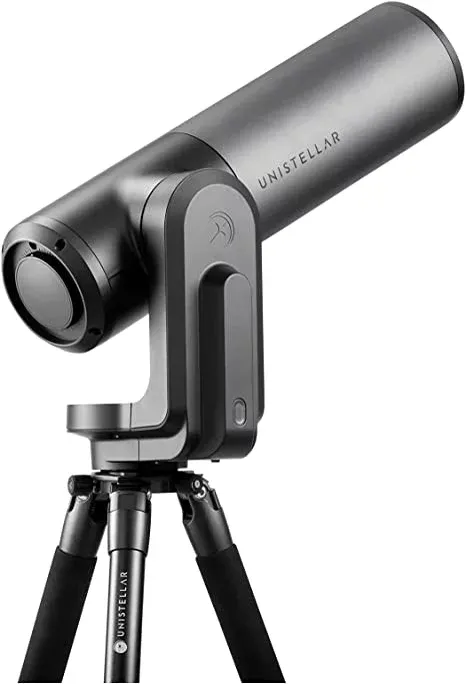
Unistellar eVscope eQuinox smart telescope on its tripod

Smart telescope

Unistellar eQuinox

A 114 mm f/4 reflector with no eyepiece at all: the sensor feeds an on-board computer, and the view arrives on a phone or tablet. Because it stacks frames live, faint galaxies and nebulae build up on screen in seconds rather than staying invisible. Several people can watch the same view at once, which is why it carries most public nights. Durbin began with two of these in 2023.

  • 114 mm f/4 (450 mm)
  • Live stacked view
  • Shared to phones
02
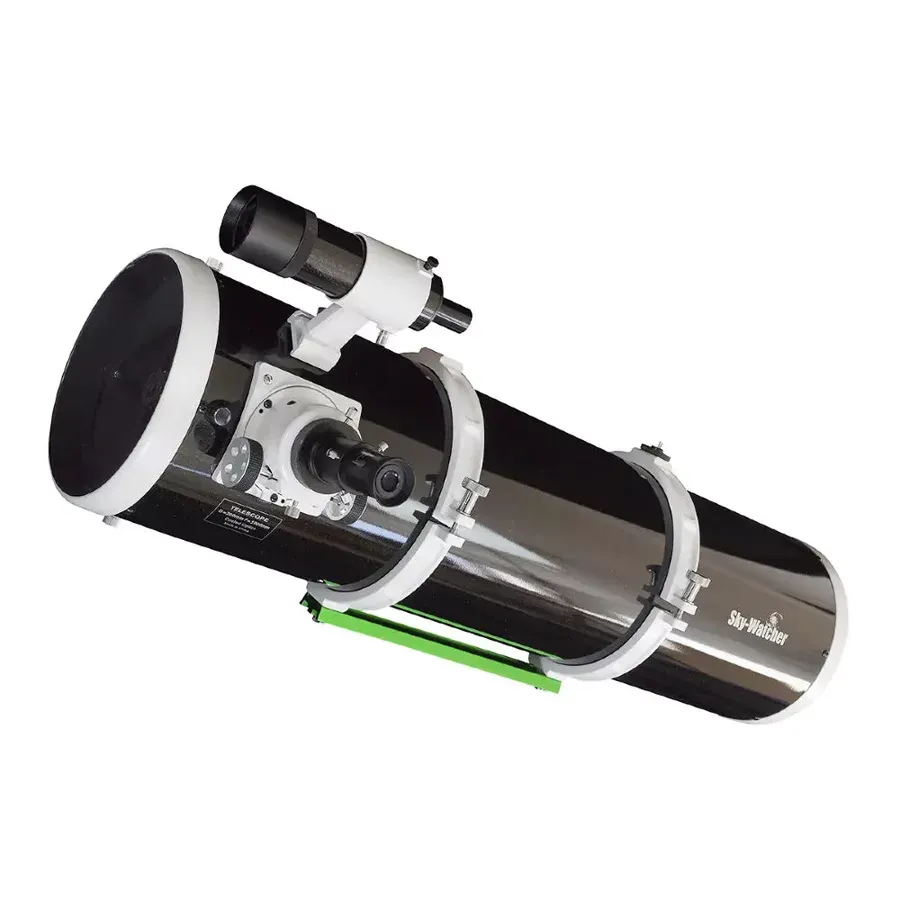
Sky-Watcher Explorer 200P 200mm Newtonian reflector optical tube

Manual reflector

Sky-Watcher Explorer 200P

An 8-inch parabolic Newtonian for looking through rather than at a screen. The aperture gathers roughly three times the light of the eQuinox, and on the Moon and planets a good eyepiece still beats a sensor. Its dual-fit Crayford focuser takes both 1.25-inch and 2-inch eyepieces.

  • 200 mm parabolic
  • 1000 mm f/5
  • Crayford focuser
03
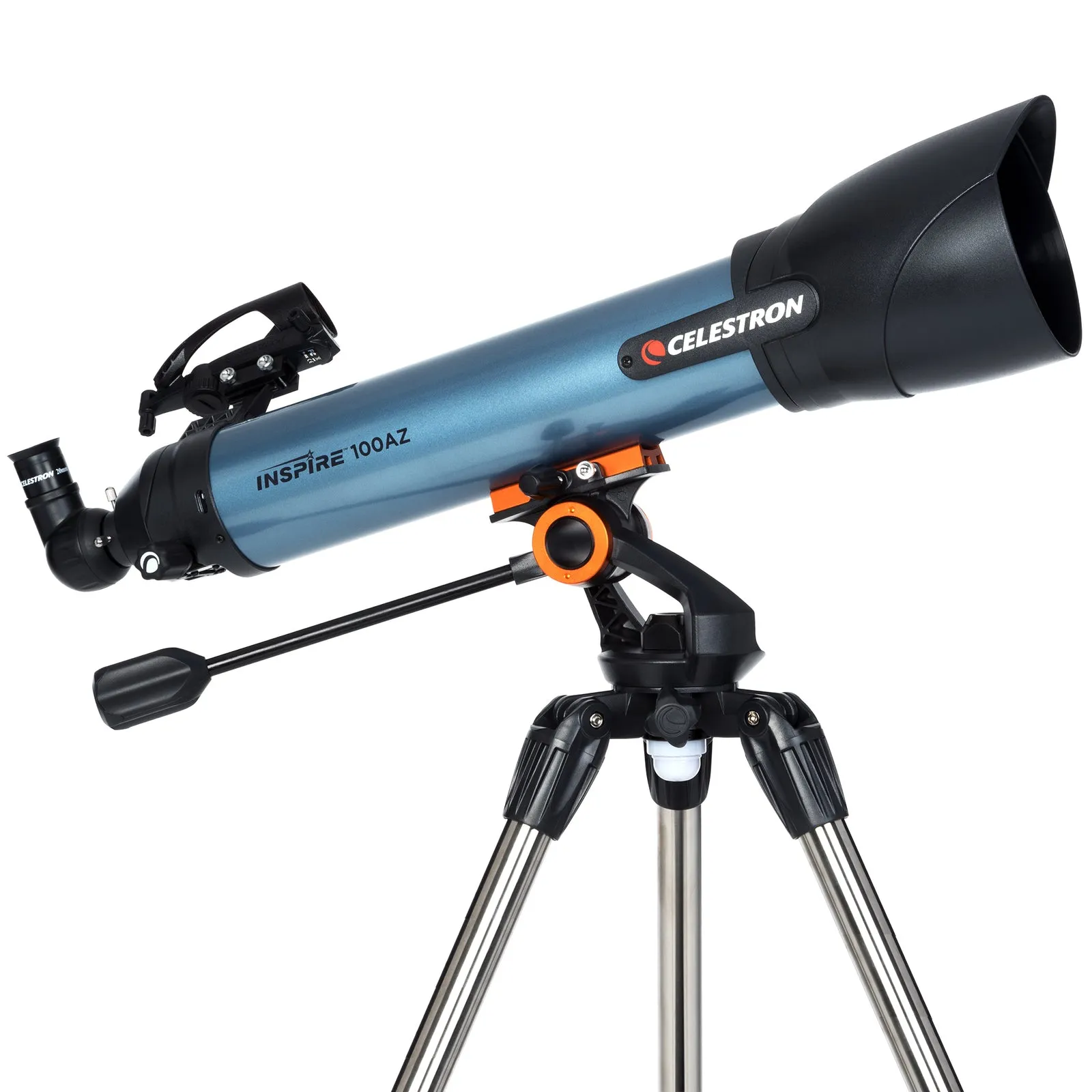
Celestron Inspire 100AZ refractor telescope on its manual alt-azimuth mount and tripod

Manual refractor

Celestron Inspire 100AZ

A short 100 mm refractor for quick public observing and hands-on sessions. Its wide field makes the Moon, planets, bright star clusters and showcase deep-sky objects easy to find, while the panning-handle alt-azimuth mount keeps setup and pointing simple for new observers.

  • 100 mm refractor
  • 660 mm f/6.5
  • Manual alt-azimuth

The light continues in the exhibition.

Enter the exhibition